
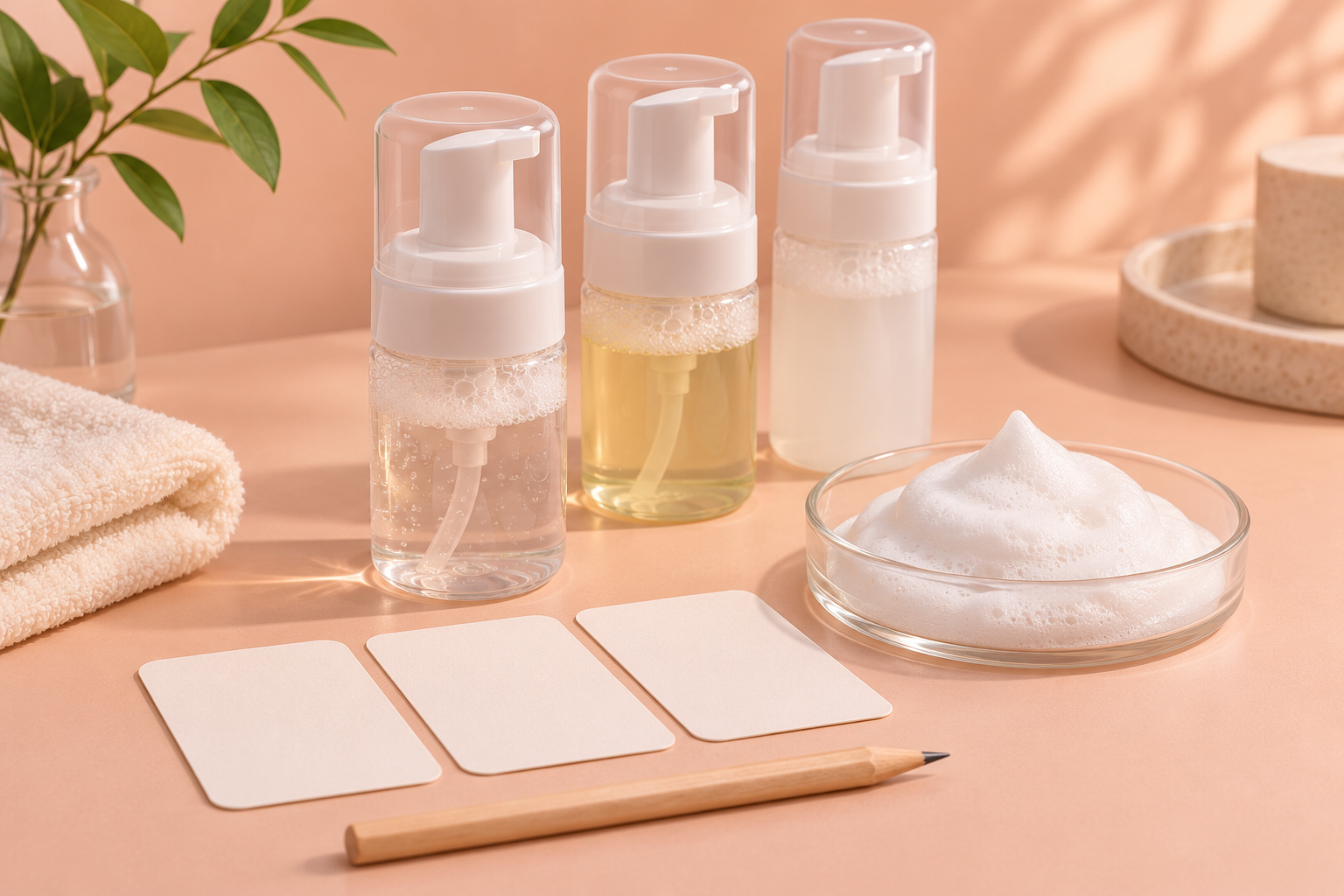
When comparing facial cleanser samples, begin with the questions the brand needs to answer. Identify each sample revision and the purpose of the review so that early development options do not become confused with later candidates. Informal observations can support a discussion, but they do not establish the safety or efficacy of the finished product.
Use a consistent record structure for appearance, dispensing, application, and rinsing observations. Separate what the reviewer noticed from what the reviewer personally prefers. Foam volume alone should not be treated as proof of cleansing performance or mildness. Keep the language descriptive and ask the development partner how the observations should inform the next discussion.
Distinguish characteristics the brand wants to preserve from aspects open to revision. If a reference cleanser helps explain a preference, identify the specific experience being referenced rather than requesting a copied formula or assuming equivalent results. Refer discomfort or unexpected changes to appropriate qualified reviewers instead of treating those concerns as ordinary aesthetic preferences.
At the end of each round, summarize the sample identifiers, agreed direction, unresolved questions, and next responsible person. Preserve the earlier decision record. If the formulation or packaging changes, ask the relevant technical specialists which evaluations need to be revisited. A revised sample should be clearly identified rather than silently substituted into an earlier approval discussion.
For skincare OEM/ODM discussions with BioCera Labs, provide organized cleanser sample feedback alongside the development brief. The company is Peachcore Technology Limited. Evaluation plans and acceptance requirements should be agreed for the actual product and intended market. This guide supports project communication and does not replace professional product assessment.