
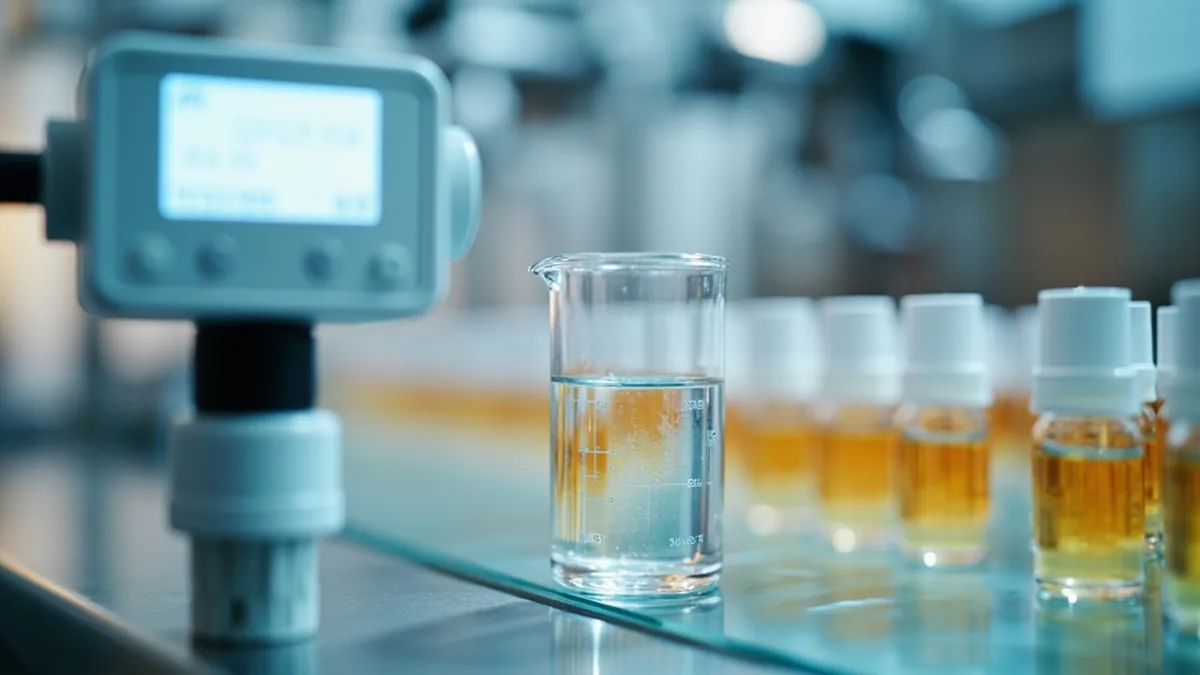
Intimate wash products contact areas near mucosal surfaces, so their design goal is not maximum cleansing but a balance between effective removal of residues, respect for the local environment, and user comfort. The vaginal environment typically has a pH of approximately 3.8–4.5, but external cleansers should not be treated as equivalent to conditions inside the vagina. Skin, mucosal surfaces, residues, and product matrices differ; therefore, a pH value alone cannot establish mildness. The target range must be considered alongside surfactant selection, contact time, rinsing, and the intended user population.
From a formulation perspective, a mildly acidic system affects surfactant ionization, micelle behavior, and cleansing performance. Anionic surfactants become less ionized as pH decreases, which can support a gentler cleansing profile while retaining the ability to emulsize oils and lift residues. However, lower pH may also alter preservative activity, fragrance behavior, polymers, and botanical extracts. The target pH should therefore be built around the complete system—including surfactant concentration, rheology modifiers, fragrance, preservatives, and functional ingredients—rather than achieved simply by adding more acid.
A pH range of 3.8–4.5 is not a universal endpoint for every raw material. Buffer capacity determines whether a formula can maintain its pH across storage temperatures and packaging conditions, making an initial measurement insufficient for shelf-life prediction. Formulators typically examine pH drift, viscosity, and appearance after temperature stress, together with accelerated stability and microbial challenge testing. For OEM development, the formula should also define raw-material addition order, process windows for pH adjustment, and compatibility among acids, actives, and the preservation system.
For brands and procurement teams, a mildly acidic claim does not automatically mean hypoallergenic or side-effect free. Safety depends on the finished formula and directions for use. Reviewers should assess the complete ingredient list, intended application area, dilution instructions, rinsing requirements, and user guidance without presenting ordinary cleansing, menstrual use, and other use contexts as interchangeable. For the United States, product classification, facility registration, current good manufacturing practice, and MoCRA-related labeling and records should be evaluated. Other markets require separate checks against local cosmetic, microbiological, and consumer-information rules.
Formulation validation should combine measurable performance with controlled sensory evaluation. Foam volume, removal performance, rinse-off residue, viscosity distribution, and in-use attributes can be assessed alongside appropriate skin tolerance work, stability studies, microbial challenge testing, and other necessary safety evaluations. pH should be treated as a controlled quality attribute rather than a stand-alone marketing claim. Brands can also ask OEM partners to define the measurement method, sampling point, and acceptable tolerance, then evaluate batch-to-batch variation, filling containers, and storage effects on the finished product.
BioCera Labs offers OEM, ODM, and OBM services for intimate care brands, including multi-piece kits and BFS aseptic single-dose filling options. Its Shanghai manufacturing site includes eight automated production lines, a 100,000-class cleanroom, and an EDI purified-water system. Sampling and bulk production can be supported with documentation such as COA, MSDS, stability data, and challenge-test reports. The appropriate manufacturing route should be selected according to the target market, formulation complexity, packaging format, and projected order volume.